A Good Reason to Blog

Lately I’ve been writing, so I’ve been away from my blog. But today I read an old post by the recently deceased “information should be free” internet crusader, Aaron Swartz. It’s the best reason to blog that I have come across.

Though I’m not the type to post unedited, I agree with Aaron. Writing is part of my thought process. I’m now in the habit of writing when I’ve had a moment of clarity. Between post-it notes, two journals, a computer, and the occasional envelope, I try to capture the moments that seem most important.

I’ve heard that if the human mind had to process all available stimuli, we would go insane. We’re programmed to distill the most important information in any given situation. Malcolm Gladwell describes this with his book, Blink.


I just finished Blink and have to admit that I had to work to figure out his thesis. I think it was a two-parter:

1. humans make snap judgments all the time, which are often wrong

2. experts who make snap judgments based on their years of expertise are usually right, though because this knowing operates beyond conscious awareness, it can be difficult to articulate the reasons that they “just know.” (Sorry, the second part is rather lengthy).

For me the take-away from Blink is that we can work to cultivate thoughtfulness in the face of uncertainty and trust our instincts when we’re confronted with a topic or decision we’re greatly familiar with. Oh, and we should avoid stereotyping people or making up our minds prematurely – the old adage, “don’t judge a book by its cover.”

Regarding the in-between areas, of living in world that’s often confusing, sad, and unpredictable, I like to write as a way of sense-making. Or at least, acceptance-feeling.

Gladwell didn’t say anything about writing as a way to find peace in a troubled world. But then again, writing is what he does for a living. I bet he’d approve.

Elegy ~ Sandy Hook Elementary School ~ December 14, 2012

In memory of those who died at Sandy Hook Elementary School in Newton, CT, on Friday, December 14, 2012.

It’s humbling to try to write anything as a response to an event like the Connecticut school shooting. It’s a reminder of just how inadequate words can be.

After something horrific happens, whatever we feel is our truth. All feelings are a certain kind of very fleeting truth. Since Friday, I have felt deeply sad, a sort of a grief though I didn’t know any of the dead. I’ve also felt fear, anger, and again, sadness.

Fear is an emotion designed to helps us avoid future pain. It leads us to close down, to escape, to batten for another blow. Some people will feel fear and want to stay home, stay in, stay away. Others will feel fear and want to buy a weapon. Still others will want to ban future weapons sales, or even confiscate the weapons that are already owned. Fear makes us want to control.

Anger is an emotion that compels us to act, to protect and to defend ourselves. Some people will feel angry and lash out at the shooter, the community, the NRA, the lack of mental health care in this country, the government, the President. Those feeling angry will want to do something with their anger. Angry people arm themselves, protest and threaten, or blame. Angry people sign internet petitions and write their Congressperson or Senator.

Grief means that something sacred and dear has been lost. We will grieve and our grief will be overwhelming. We will feel helpless, hopeless. We will want to do something to prevent ourselves and others from future grief. We will want to give up. Those who are grieving will not be able to think clearly or concentrate until their grief has dulled. For their grief will never pass, but only dull. The grieving need our support and our love. They don’t need our fear or our anger.

~~~~~~~~~~~~~~~~~~~~~~~~~~~~~~~~~~~~~~~~~~~~~~~~~~~~~~~~~~~~~~~~~~~~~~~~~~~~~~~

After something horrific happens, whatever we do is our choice. In our choices we reveal, or obscure, our humanity.

I agree with Liza Long, “I am Adam Lanza’s Mother,” who wrote that more than anything else, we need a conversation. A conversation with those who become so angry or so scared that the only thing that makes sense to them is destroying life, their own or others’. A conversation with those who are caring for the scared and angry. We need a conversation with those who own guns out of fear and those who train their children to use them out of fear.

After all this carnage, it might help to talk to one another using kind words. It might help to acknowledge that some people only feel safe if they own a gun. Then we must decide together how to make sure that everyone actually is safe.

It might help to look at the data, to learn about the places in the world that are most safe and those that are the least safe. To see how many weapons exist in each of those places and how the laws in the safe places deal with weapons and how the humans in those safe places deal with each other.

Fear, anger, and grief don’t lend themselves to conversation. But I have to believe that we can learn to acknowledge our emotions and then make humane choices. We can choose to talk, and choose not to fight, because we are human beings.

We can look at the facts and the deaths. We can accept each other’s deep emotions and say: I understand. Like you, I also feel pain and anger, grief and fear. Like you, I have felt lost and I have felt loss.

Like you, I want this to change. I hope for this to change.

~~~~~~~~~~~~~~~~~~~~~~~~~~~~~~~~~~~~~~~~~~~~~~~~~~~~~~~~~~~~~~~~~~~~~~~~~~~~~~~

Hope means that we trust in a promise, or at least, that we would like to trust. We feel hope when a way opens that seemed closed and when either the rock or the hard place gives way. We feel hope when the angry and fearful voices, the voices that are inside all of us, are heard, acknowledged, and so can finally be quiet.

We feel hope when our fears are no longer ignored.

I’m reminded of the words of non-fiction authors Pam Cope and Aimee Molloy in their story of a journey after grief. They wrote of little children, the voices of our children, the voices of all of us:

Now that you’ve seen my suffering, now that you know about me, what will you do?


Creating…Ourselves

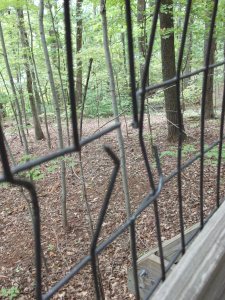
fence & treesIn my day job, as a researcher, we have found that when children make things with    their hands – especially when they copy designs made with creative materials – it helps their behavior, attention, and achievement.

I have begun to see our human desire to create everywhere.

Cooking, writing, painting

Sewing, singing or songwriting

Gardening and woodworking

Photography

and not least of these, blogging.

As a writer I’ve become more consciously aware that I need to write in order to sort things out. Writing helps me create sense and order out of the noise in my head. This 21st century life is so full of details – emails, news updates, constant status updates and FB posts.

Eckhart Tolle writes about “the noise in your head that pretends to be you and never stops talking.” Though he advises simply pausing, acknowledging the noise without spinning off into an alternate reality, I think of writing as a halfway point. Halfway between the chaos of confusion and the perfect simplicity of silence, is an orderly set of thoughts on paper (or screen).

The quiet that emerges after a good writing session feels like the earth after a good hard rain. The air feels cleaner and lighter. The forest is quiet and can be  seen through the trees.

The canvas is cleared, to begin again, to make room for another noise, another mess, another “sorting out of things.”

Dear Comcast: How You Could Earn Back My Business

Below is the text of an email I sent this afternoon to a local Comcast Sales Executive. Unbeknownst to him, he was getting me on a loquacious and socially responsible sort of day. 

Dear Mr. X,

Today you stopped by my place on Robertson Avenue to ask why I don’t use Comcast. I was certainly honest which I feel is the best policy but can understand the difficulty of listening to someone say negative things about your employer or company. You were polite and kind and I thank you for that.

When I give feedback I usually try to come up with some positive directions for the future. And because I sense that you have some influence, at least locally, I would like to add something to my response.

First, I don’t think large companies are inherently bad. But I think that the larger the company, the greater the social responsibility to the world and community. I would be impressed and likely to consider returning to Comcast if I were to learn of:

– meaningful (large) donations to local charity or non-profits, or  even other countries in need of services. We are such a rich nation and Comcast is an extremely wealthy company. Is it possible for some of their profits (or more than are currently spread around) to be distributed to those in need?

– more flexibility to personalize and customize packages. i don’t watch television – for me most programs are psychologically toxic – and don’t want to pay for it. but the best deals on internet require a TV package. this seems unfair.

– an explanation of what the costs are for in my monthly bill. to the level of detail such as, how much is going to the CEOs salary, how much is going to the servicemen and women and dedicated local staff such as yourself, how much is going to tech maintenance. I don’t want to say “internet is too expensive” without knowing for sure how much it costs. but i’m not interested in putting money in the pocket of the Comcast CEOs either.

For the record, I don’t think CenturyLink is that great, and may have a worse record in some areas than Comcast. I really haven’t done my homework. But for me, it was a choice of the lesser of two evils.

I thank you again for tolerating my candidness. I honestly hope I’ve reached you on a personal level -beyond the level that I’m a potential customer and you’re an employee of Comcast. I believe we’re here in this world to help each other and I believe honesty and generosity are important parts of that.

Bottom line is, I think large corporations, like Comcast and many others, could do more to add to the good in the world than they are currently doing. And as their representative, I entrust you with communicating this up the chain, with the hope that it reaches a CEO somewhere with a big heart.

All the best,

Claire


Being Kind to Myself: The Email Diet

Today I put myself on an email diet. Which means I’m allowed to check email three times per day. This applies to my work and personal email accounts, and even with the limit, I probably had my email open for almost two hours. But compared to my usual habits of leaving it up all day, this was a huge improvement. And I get to use this snazzy chart:

mon tues weds thurs fri
1 2 3 1 2 3 1 2 3 1 2 3 1 2 3
1 2 3 1 2 3 1 2 3 1 2 3 1 2 3
1 2 3 1 2 3 1 2 3 1 2 3 1 2 3
1 2 3 1 2 3 1 2 3 1 2 3 1 2 3
1 2 3 1 2 3 1 2 3 1 2 3 1 2 3
1 2 3 1 2 3 1 2 3 1 2 3 1 2 3
1 2 3 1 2 3 1 2 3 1 2 3 1 2 3
1 2 3 1 2 3 1 2 3 1 2 3 1 2 3
1 2 3 1 2 3 1 2 3 1 2 3 1 2 3
1 2 3 1 2 3 1 2 3 1 2 3 1 2 3
1 2 3 1 2 3 1 2 3 1 2 3 1 2 3
1 2 3 1 2 3 1 2 3 1 2 3 1 2 3

Over the past few weeks I realized I was on email overload. Email had become my go-to procrastination activity, but unlike watching Arrested Development, it was also what could send me into panic mode most reliably. I used to leave work, unsure of what I had accomplished, but feeling completely fried.

We have just come through a period of deadlines at work, where I needed (or pretended that I needed) to keep email open all the time in case something time-sensitive appeared. But having my brain on constant alert mode meant I was attempting to keep vigilant attention all day, which is exhausting. Not to mention, about half of the incoming emails required a response, so I was also adding to my to-do list several times per hour.

A few conversations helped me confirm that I’m not the only person suffering from email fatigue. Colleagues shared strategies like reading email twice per day, once in the morning and again in the late afternoon; or anytime except for morning writing sessions; or replying to emails about certain topics on certain days. I even heard of a somewhat complex system of replying promptly when not working on a paper, and replying with a canned “I’ll get back to you in 2 weeks” when working on a paper.

When I mentioned my new email diet to a student, she acknowledged she does the same thing, and admitted that she’s afraid she’ll miss something important. She rattled off all the different lists that provide regular, sometimes time-sensitive, information: coursework, program announcements, student news and events, and our lab announcements.

Our culture challenges us with “too much of a good thing” habits: flying on airplanes, watching television, checking email. As much as I appreciate my information economy job, it’s making me tired, and there are no structures in place where I work to help my email behavior improve.

The first hurdle was identifying the problem. I don’t think I wanted to admit to myself that I “couldn’t handle” having my email open all day. Like an addict, I thought it was under my control and that I could stop at any time. I also compared myself to other colleagues, assuming they were on email all the time, asking myself why they could do it when I seemed to be tiring myself out.

Then the light bulbs began to go off: first, I recalled the words of one colleague who I believe manages his email better than I do (his five young children probably provide some extra incentive): “Emails beget emails.” Which means replying to emails – “tidying up” –exacerbates instead of solves the problem.

Second, I realized that I don’t sit around waiting for people to reply to my emails. Okay, sometimes I patiently await a reply, but it’s probably every tenth one. The others I forget about as soon as I’ve hit “send.” So I’m going to assume that 9 out of 10 people who email me aren’t worried about when I respond. Which is a high-tech translation of “I’m not nearly as important as I think I am.”

Finally, I gave myself a break. I decided it’s okay if I become tired at work and if I become tired from checking email. I decided I’m not Super Email Woman (apparently someone is. The internet is amazing). Instead, I’m Normal Brain Lady.

This last insight was difficult. I was reading an essay this morning by Diane Ackerman and she shared the simple, “why didn’t I think of that” idea that her energy is finite. She wrote that in one morning, she can either write, OR talk to a friend, OR answer emails. But not all three. And it’s okay, because she’s Only Human.

Imagine that. (And now, with my extra brain energy, from being kind to myself, I can).