Category: Writing
Thank You to Our Beta Readers ~ Braver Than You Believe is Published!
After a week of “beta-publishing,” Braver is back! Thanks again to all who have supported this project. We couldn’t have done it without you!

Two names appear on the cover of Braver Than You Believe… but so many other people contributed. Here’s the start to a long, long list of thank-yous.
First, a huge thank-you to all our “beta readers” whose feedback polished our book to a shine:
Elizabeth Brickhouse
Shelley Cowart
Kae Fassel
Jeanie Joyce
These dearly loved ones were there at critical moments (that is, last-minute and impromptu) with wisdom and tech support:
Mark and Mary Mitchell
Christopher Rates
I owe special gratitude to BACCA Literary for their encouragement of the project from the beginning, and for nuggets of brilliance such as suggesting we use different fonts to help readers track the ladies:
Thank you to the inspirational members of Skyline Harmony Chorus – whose music and companionship after my own divorce helped me to become stronger…
View original post 31 more words
Thank You to Our Beta Readers ~ Braver Than You Believe is Published!
Two names appear on the cover of Braver Than You Believe… but so many other people contributed. Here’s the start to a long, long list of thank-yous.
First, a huge thank-you to all our “beta readers” whose feedback polished our book to a shine:
Elizabeth Brickhouse
Shelley Cowart
Kae Fassel
Jeanie Joyce
These dearly loved ones were there at critical moments (that is, last-minute and impromptu) with wisdom and tech support:
Mark and Mary Mitchell
Christopher Rates
I owe special gratitude to BACCA Literary for their encouragement of the project from the beginning, and for nuggets of brilliance such as suggesting we use different fonts to help readers track the ladies:
Thank you to the inspirational members of Skyline Harmony Chorus – whose music and companionship after my own divorce helped me to become stronger and braver.
Thank you to Jean Cooper for her careful copy-edits.
And, most recently, thank you to my brother Brandon Clahassey for thoughts on next steps in marketing and online sales.
Guest Blogger Eve Pearce: Overcoming Addiction with the Written Word
Eve Pearce is a full-time writer and mother of two. When she was in her teens, addiction hit the family and left wreckage in its wake. She has since moved states, settling down in Oklahoma, which is a far cry from her Connecticut roots, where she writes about her experiences and passion for art and literature to help addiction’s victims and addicts themselves.
The therapeutic nature of writing should not be underestimated. Studies have shown that writing can help people overcome personal trauma, and even helped US students come to terms with the events of 9/11. Writing has also been linked with helping to ease the physical symptoms of such illnesses as asthma and rheumatoid arthritis, and is said to boost the immune system. With all that writing is capable of, the question remains; can it help those suffering from addiction? Whether it is addiction to drugs, alcohol, or gambling, addiction presents itself in a variety of ways. There is no ‘one size fits all’ approach to overcoming an addiction, but as with so many problems in life, writing can and does help.

Artist and author Julia Cameron recommends journaling in the morning
Taking the First Step
Of course the first step to overcoming an addiction is admitting to having a problem. The next is to seek outside help, as this will give addicts a much higher chance of beating the addiction and staying on the wagon. While the love and support of family and friends can be a great help in the journey to recovery, for most people it takes the help of qualified professionals to truly get them on the right track. Drug abuse rehab is one of the most reliable options available for addicts who truly want to get better. New York rehab facilities are some of the best in America, with places that offer varying types of programs to help deal with all kinds of addiction. Therapeutic writing is often used as part of rehabilitation programs, depending on the facility. Regardless of whether it is part of the program, patients can and should use writing as part of their healing process, whatever stage they are at in their recovery.
Dear Diary…
Regular individual and group therapy sessions are commonplace in rehab. Individual sessions can help patients to identify the root cause of their addiction, and what changes need to be made in their lifestyle to keep them from temptation. Whereas group therapy can help patients in understanding that they are not alone in their struggle; that others experience the same highs and lows that they do. Some people thrive in this type of therapy, and have no issue with discussing their personal problems and experiences with strangers, while for some the process can be very tough.
Keeping a daily journal provides a fantastic addition to this form of speaking therapy, helping those who are shy about speaking to let out their bottled-up emotions. It is a human tendency to omit certain details when relating our experiences to others, depending on the image we want to present of ourselves. This happens subconsciously. A journal however, will only be read by its owner, and there is really no point in lying to oneself. Patients should empty their thoughts and feelings onto paper, without worrying about coherency and without censoring any of the less savory details. This process of ‘letting it out’ provides an immense sensation of relief. Reading back through the journal will also help patients to identify areas they need to work on during therapy.
Reaching Out
In order to have gotten to the point of admitting to having a problem and seeking help, most addicts will have reached the ‘rock bottom’ stage. Addiction grips its sufferers in a way that forces them to make bad decisions that they would not have made in their right mind, as getting the next ‘fix’ is all that matters. Family relationships and friendships are often greatly damaged as the result of addiction, and putting pen to paper can go a long way towards repairing this damage. It’s often hard to eloquently express ourselves through speech, and it is also too easy to avoid the most difficult of topics. Writing a letter to the loved ones that have been hurt because of addiction is the best way to truly express remorse. Not only will this process help to repair the broken bonds, it will help relieve the guilt that can often drive people back to the source of their suffering.
Award-winning author Jill Dawson
Sharing Your Story
Whitbread and Orangeprize-shortlisted novelist Jill Dawson began her writing career with a journal she started writing at age nine. As quoted in The Guardian, she says: “It has helped me personally and also made me a better writer.” Like Dawson, addiction sufferers may find that the process of journal writing unlocks a potential they never knew they possessed. Addiction is a common problem throughout society, and for many, reading or hearing about the struggles and success stories of fellow sufferers can be a great help. So for those who have faced addiction and come out the other side; there may be no greater way to give back.
Want to Stretch, Learn, and Grow? Learn How in “Creating a Great Writing Group”
SATURDAY MARCH 23 @ 10am
**Free** SESSION – VA Festival of the Book
Omni Hotel, Preston Room
Creating a Great Writing Group
Like to write? Hate to write? Want to write? It’s easier in a group! Come to our free interactive session. Learn how to create an effective writing group and get the support you need to have your voice be heard.

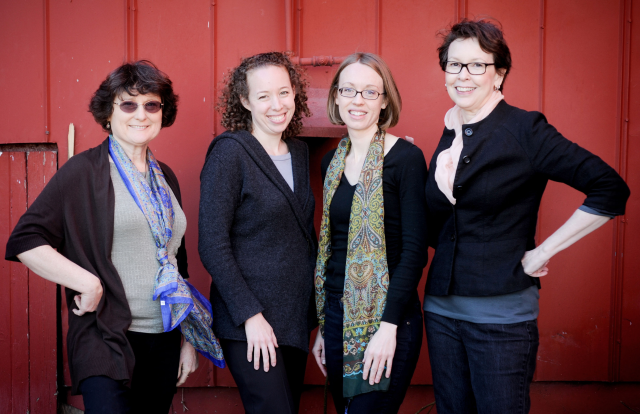
Carolyn O’Neal, Bethany Joy Carlson, Claire Cameron, A M Carley
Celebrating International Women’s Day…on My Birthday
I can’t remember when I learned that my birthday, March 8, falls on International Women’s Day. I must have been pretty small, and I recall thinking, “Huh. That’s cool. I should do something to celebrate.”

Google’s image on IWD 2013
Then two decades went by. Today, my 32nd birthday, was the first birthday I celebrated IWD in any meaningful way. It turns out that today, March 8, 2013, marks 100 years since the occasion was moved to the date of March 8 following the 1913 late February event.
IWD emerged between 1908 and 1913 following unprecedented tumult in societies around the world. Sound familiar? Today feels much the same, though for educated women like myself living in modernized societies, I don’t deal with life-or-death working conditions. I have the right to vote. Though I love and want to share my life with a particular wonderful man, I am beholden to none. And though it seems a precarious freedom at times in the South, my value to my community does not depend on my capacity to bear children.
Today, I’m mindful that many women around the world live in deplorable conditions, are subject to the whims of violent or controlling men, or lack basic human rights. I recognize that the challenges in my world are more spiritual than physical in nature. Compared to what other women of our world face, it seems a privilege that the challenges in my particular world include figuring out whom to love and how best to love them.
@@@@@@
Three years ago, in the spring of 2010, my three-year marriage was about to unravel. By September, I was living alone. It was the most emotionally difficult time of my life. Then in December, I met a friend of a friend who wanted to write a book. It would be based on a year of emails among six women who had lost a spouse either to sudden death or to divorce after an affair.
This meeting changed my life.
I became the editor of the book, and over the next two years, I worked in the evenings and on weekends to turn over 103,000 words of emails into a 75,000-word narrative non-fiction story of hope and healing after loss. Through the process, I gained confidence. As my heart steadied, I slowly “grew into” myself while I enjoyed a special window into the journey of these six brave people.
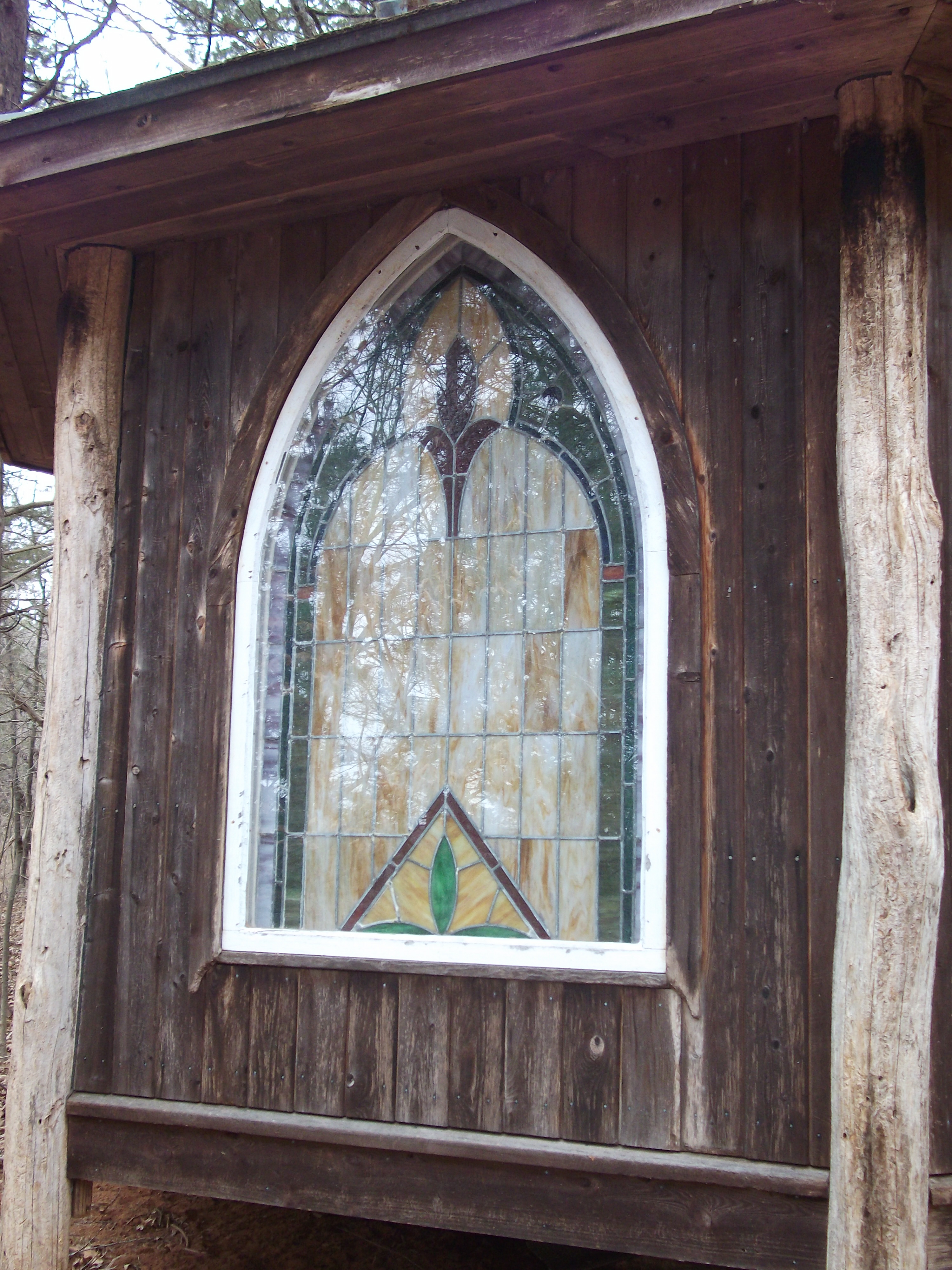
Sanctuary Window at Seven Oaks Retreat
Madison, VA
As a newly single woman, I read about other women – single mothers – who were making it on their own. Their struggles were not mine exactly – for example, I don’t have children. But their heartache was familiar, along with their desire to love and live fully. Like me, they were women emerging from a great loss into their stronger, deeper selves. In that way, they were the same as all of us, male or female, or “prefer not to say.” We are all hurtling through this world, hurting each other and ourselves, wondering how to do better.
We are all trying, really, really hard.
Today – March 8, International Women’s Day – our book is complete. It’s a story by women, about women, for women whose hearts may be hurting and whose feet sometimes have trouble finding the path. Today, Sue Mangum and I are ready to begin sharing her dream…our book…and six true stories with the world.
Braver Than You Believe: True Stories of Losing Love and Finding Self
Happy Birthday, International Women’s Day! This one’s for you.
 claire e. cameron